 LINE
LINE
 WhatsApp
 Google Map


ONE Clinic : Surgery & Aesthetics
Address concerns such as a short chin, recessed chin, flat chin, asymmetrical chin or a chin shape that does not complement your facial features with personalised chin augmentation. Each 3D-printed silicone chin implant is designed from the patient’s actual bone structure, allowing the surgeon to define the ideal chin length, width, and projection in precise detail.
At ONE Surgery & Aesthetics Clinic, every chin augmentation treatment begins with a multi-dimensional facial assessment. Patients work with the surgeon to design their preferred chin shape, while a CT scan is used to evaluate the internal facial structure. The personalised implant is then manufactured in South Korea, creating a base that follows the natural contours of the chin bone and supports more precise placement according to the surgical plan.

Chin augmentation is a surgical procedure that adjusts the shape and proportions of the chin. During chin implant plastic surgery, the surgeon places an implant over the chin bone through an incision inside the mouth or beneath the chin. This procedure may be suitable for patients with a short, recessed, or flat chin, as well as those who want to increase chin length or projection more noticeably.
A well-planned silicone chin implant can improve the balance of the lower face by creating a more harmonious relationship between the chin, nose, lips, and jawline. However, the most suitable chin shape varies according to bone structure, soft tissue volume, facial proportions, and each patient’s aesthetic goals. A detailed medical assessment before chin augmentation is therefore essential.
Both chin filler and chin implant plastic surgery can add definition to the chin, but they differ in technique, recovery, longevity, and the degree of structural adjustment they provide. The most appropriate option should be selected according to the patient’s concerns, anatomy, and expected outcome.
Chin filler and chin augmentation each offer different advantages. The appropriate treatment should be selected by considering the patient’s chin structure, soft tissue volume, desired result, and readiness for recovery. An in person facial assessment allows the surgeon to create a treatment plan that is appropriate for the individual.
The shape of the chin has a significant effect on overall facial proportions. Chin augmentation can adjust chin length, projection, and tip alignment so that the lower face complements the nose, lips, and jawline more effectively. Common concerns include the following.
A short or recessed chin can make the face appear shorter or rounder. It may also make the area beneath the chin look fuller, even when there is little excess fat.
When the chin lacks a defined shape, the face may appear stronger or more angular and may lack visual softness.
Some patients want chin augmentation but worry that the chin may appear bulky, overly projected, or excessively long. Others are concerned about visible implant edges, an unnatural result or the possibility of the implant becoming misaligned over time.
Choosing the right chin shape requires consideration of facial width, jawline position, lower facial length, chin projection, and the profile view.
Chin designs used as a general reference can be divided into four main categories.
This design creates a tapered chin tip without making it excessively pointed. The gentle curve continues naturally into the jawline and may suit patients who want a slimmer looking face while maintaining a subtle result from chin augmentation.
This shape creates a more tapered and projected chin tip. It may suit patients who want greater facial definition or who have a noticeably recessed chin base. The projection should be carefully planned so that the chin does not look excessively sharp.
This design provides a balanced increase in chin length and projection while preserving a softly rounded tip. It may suit patients who prefer a gentle appearance and do not want the chin to look overly angular.
A masculine chin is designed with a broader base and a tip that is not excessively pointed. This can add greater definition to the lower face and may suit male patients or anyone who prefers a stronger jawline.
At ONE Surgery & Aesthetics Clinic, surgeons use photographs from multiple angles, 3D Design and bone structure data to plan each chin augmentation procedure. This allows the chin design to respond to the patient’s actual facial anatomy rather than following a temporary trend.
Personalized Silicone Implant Technology
Made in Korea
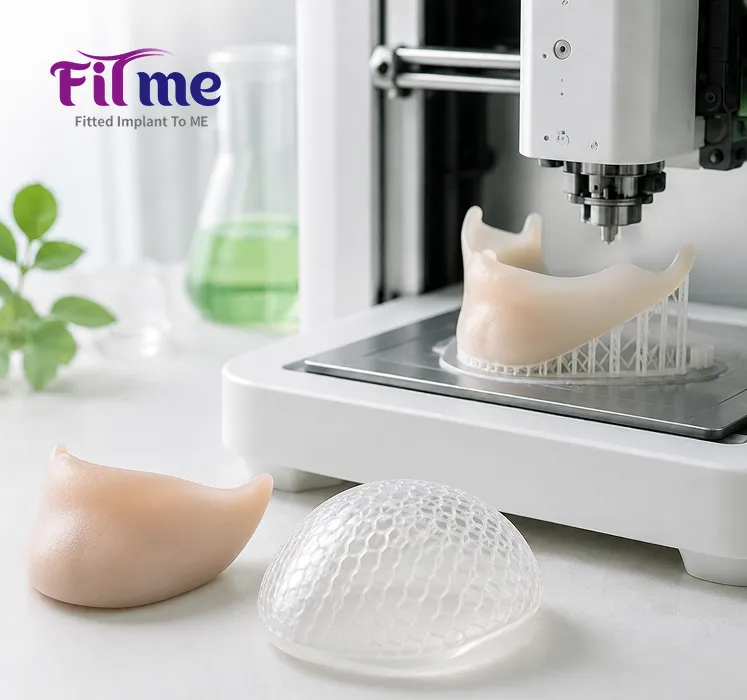
Each personalised silicone chin implant is individually manufactured in South Korea. The implant is created specifically for each patient to address concerns such as an unnaturally projected chin, a bulky chin, implant displacement or an implant that does not sit securely against the bone.
Designed from the Patient’s Actual Bone Structure
CT scan information allows the surgeon to assess the bone base, natural curves, depressions, and asymmetry. These details are used to design the underside of the personalised silicone chin implant.
Precise Control of Size and Shape
The surgeon can plan the length, width, projection, and thickness of the implant in different areas so that the result complements the patient’s facial proportions.
Reduced Space Between the Implant and Bone
Designing the implant to follow the patient’s bone structure may help it sit more closely against the chin and reduce gaps that could affect positional stability.
Edges Designed to Blend with the Jawline
The thickness and slope of the implant edges can be adjusted to reduce visible transitions and create a smoother connection between the chin and jawline.
Preview the Planned Result Before Surgery
Patients can discuss the proposed chin augmentation result with the surgeon using a 3D simulation before deciding to proceed. The simulation is a planning tool intended to provide a clearer understanding of the expected direction of the result. Actual outcomes may vary according to anatomy, healing, and other individual factors.
ONE Clinic : Surgery & aesthetics
Different types of silicone chin implant require different design and placement methods. The following comparison outlines concerns commonly associated with standard prefabricated implants and the potential advantages of a personalised 3D-printed implant.
A personalised 3D-printed silicone chin implant allows the shape and base to be planned in greater detail according to each patient’s anatomy. Length, width, and projection can be adjusted to create a chin that complements the face more naturally.
ONE Clinic : Surgery & aesthetics
For patients with a short, recessed, or flat chin, filler is often one of the first options considered because it does not require surgery and produces an immediate change. However, repeated filler treatment may create concerns over time.
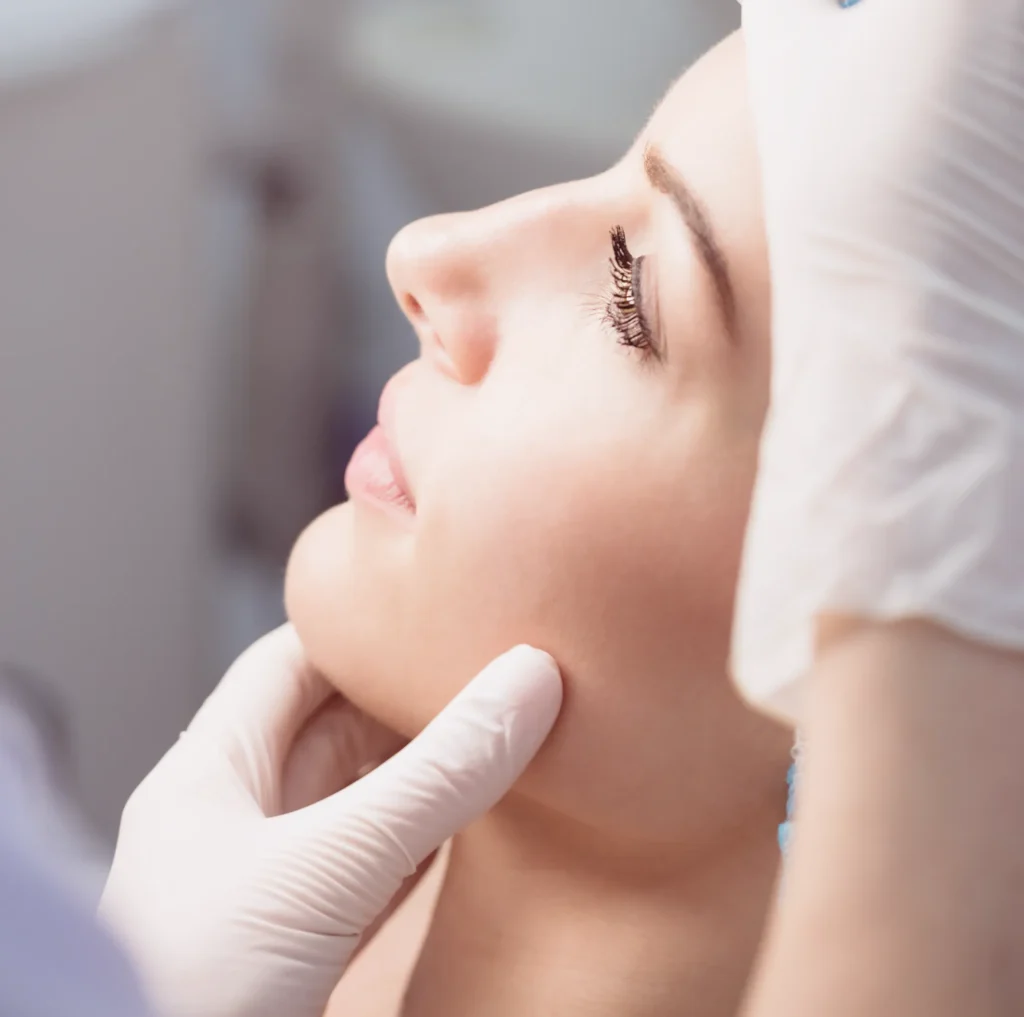
Although chin fillers can adjust the chin shape without surgery, the result is temporary and repeat injections may be required as the filler breaks down. An unsuitable product or excessive injection volume may also affect the long-term appearance of the chin.
Some filler products require repeat treatment approximately every 6-12 months, depending on the product and the patient’s response. This can lead to ongoing expenditure and repeated appointments.
The Chin May Appear Loose or Poorly Defined
Products that do not meet appropriate standards may increase the risk of inflammation, fibrosis, lumps, or distortion of the chin shape.
ONE Clinic : Surgery & Aesthetics
For patients experiencing these concerns, chin implant plastic surgery may offer a more appropriate long term alternative. A silicone chin implant can create a lasting chin shape without the gradual migration or change in volume associated with filler.
The appropriate treatment still depends on facial anatomy, existing filler, medical history, and the surgeon’s assessment.
ONE Clinic : Surgery & Aesthetics
Personalised 3D-Printed Silicone Chin Implant Surgery
TRANSFORMATION SEQUENCE
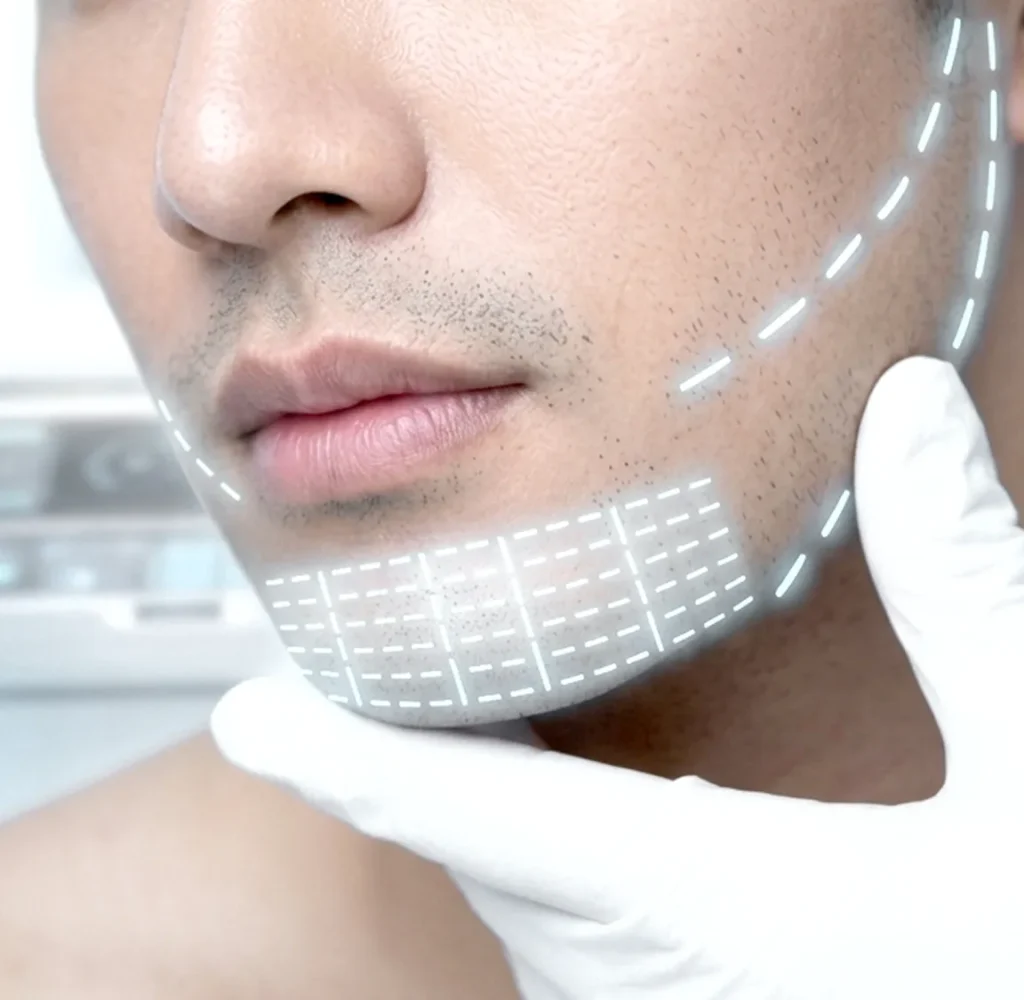
Designed exclusively for your facial structure.
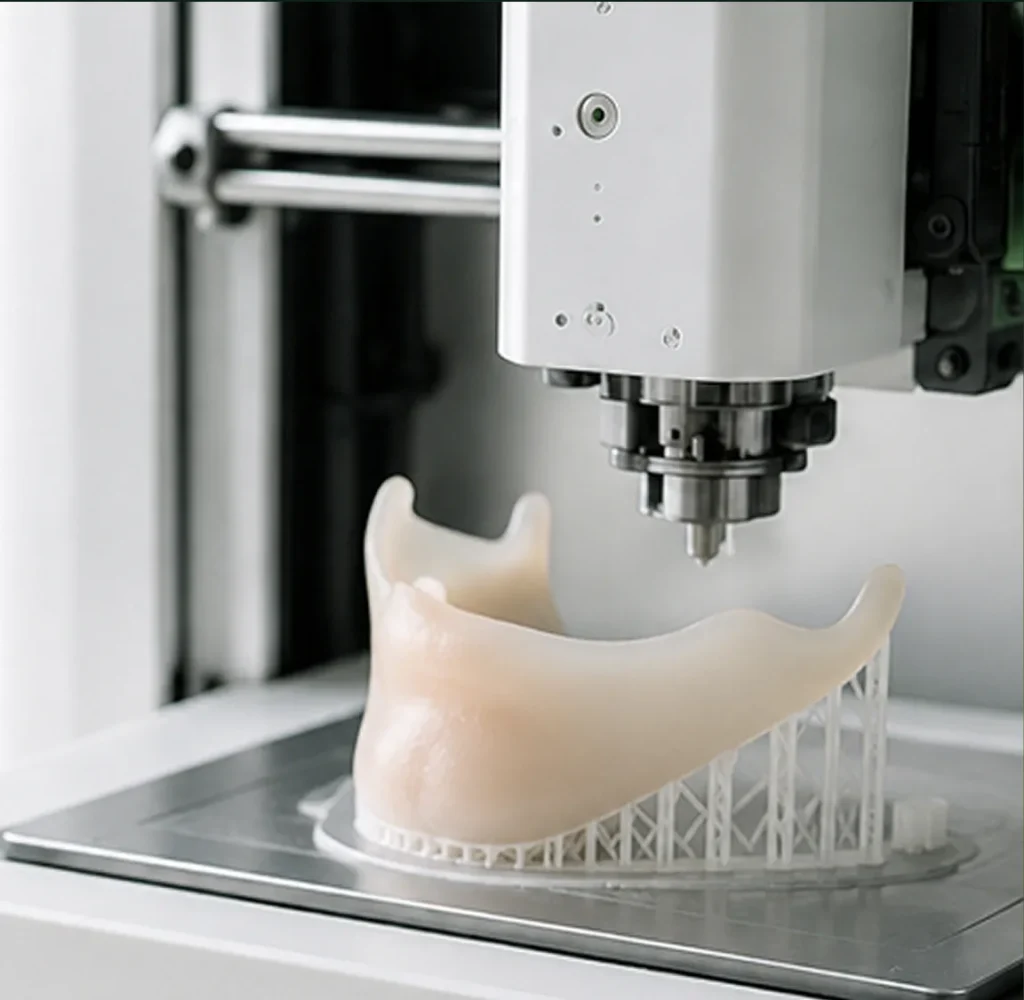
A new silicone chin implant is manufactured for each individual case.
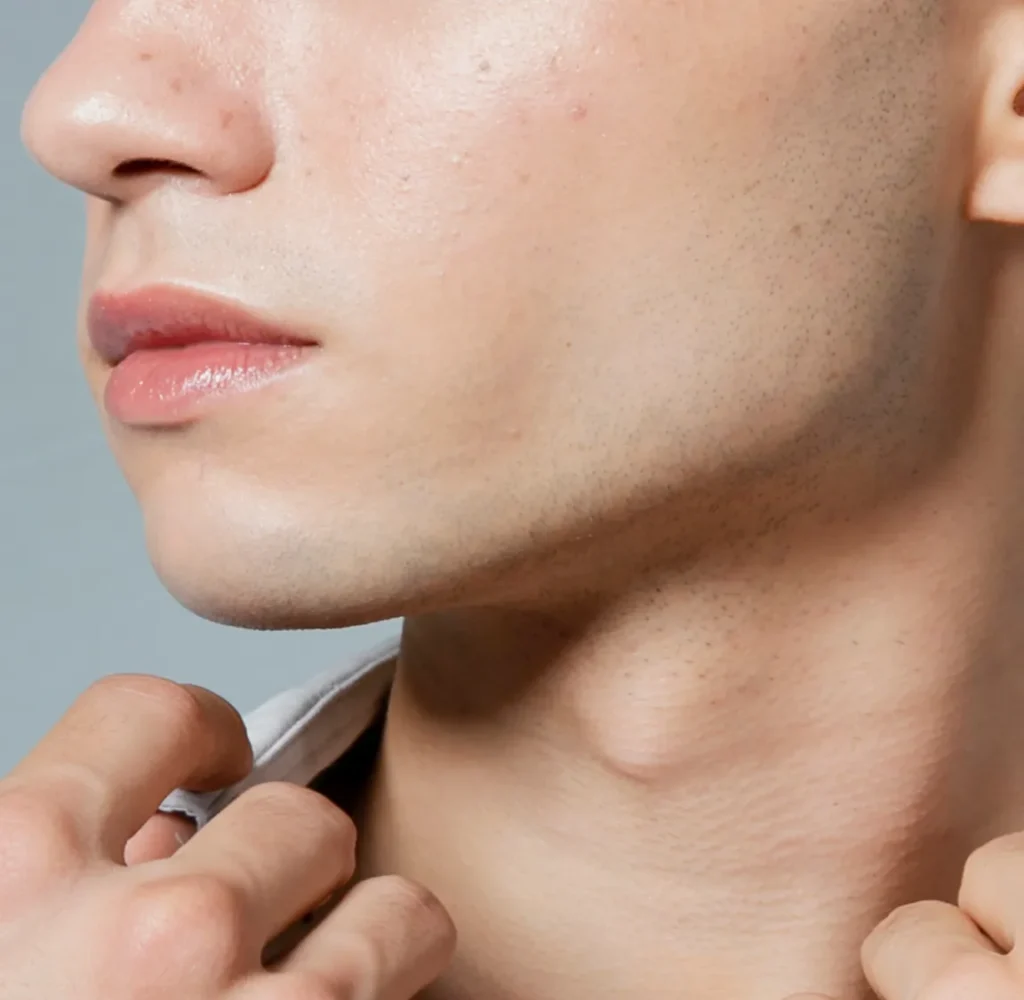
Designed to create a smooth, natural looking, and long-term result.
ONE Clinic : Surgery & Aesthetics
When talking about silicone chin augmentation, many patients worry about a floating chin implant, visible implant edges, or implant shifting. At ONE Surgery & Aesthetics, we address these concerns with “personalized silicone chin augmentation” using Customized 3D Printing, designed exclusively for each patient.
Patients can view a simulation of their own face and the proposed chin design before surgery. This allows the patient and surgeon to refine the planned shape together before proceeding with chin augmentation.
Rather than relying only on external appearance, the clinical team uses a 3D scan to assess the patient’s existing chin bone in detail. This information supports surgical planning and the production of a personalised silicone chin implant.
The implant is produced using 3D technology to follow the patient’s chin bone. This close fit is intended to reduce the possibility of movement, tilting, or visible separation and to reproduce the planned chin design more accurately.
The implant proportions are planned in relation to the forehead, nose, and overall facial structure. This helps avoid an excessively long or projected chin and creates a more balanced appearance.
3 Steps to Personalized Chin Augmentation at ONE
Balanced chin augmentation should begin with a detailed assessment of both the external chin shape and the underlying bone structure. At ONE Surgery, 3D Design, CT Scan Analysis, and 3D Printing are combined to create a personalised silicone chin implant for each patient before surgery.
A 3D facial simulation allows the patient to design the preferred chin shape with the surgeon. The proposed shape can be refined during consultation until an appropriate plan is agreed.
The facial bone structure is scanned to evaluate the patient’s actual chin bone and identify anatomical concerns before the personalised implant is manufactured.
The approved chin design is combined with the CT scan information and used to create a Zero-Gap implant intended to follow the existing chin base closely and reproduce the agreed shape.
ONE Clinic : Surgery & Aesthetics
Experience chin augmentation planned specifically for your anatomy, with a chin shape designed to look refined while supporting appropriate long-term care and safety.

Balanced facial proportions are influenced by how the chin relates to the nose and forehead. Many Thai and Asian patients have concerns involving the chin, including the following.
Patients who recognise one or more of these concerns may benefit from an assessment for chin implant plastic surgery. The surgeon can determine whether a silicone chin implant is suitable and whether the proposed changes can improve the overall facial balance.
Standard chin augmentation can improve concerns such as a short, flat, recessed, or indented chin. However, the human chin bone is not perfectly smooth or symmetrical on both sides. A personalised silicone chin implant is designed to address differences in the bone base and reduce the possibility of an implant that does not fit securely or creates excessive chin length.
Repeated filler treatment may be associated with internal fibrosis or pressure on the original bone structure. A standard implant may not sit closely against an irregular surface. In such cases, a personalised 3D-printed implant can be designed to compensate for depressions or differences in the bone base.
A detailed assessment is required to determine whether existing filler should be dissolved or whether additional imaging is needed before chin augmentation.
Patients with thin skin or those who prefer a discreet surgical result may benefit from an implant with carefully tapered edges. A personalised silicone chin implant can be designed with thin, smooth margins that blend into the natural bone structure and feel more natural beneath the soft tissue.
If the original chin bone is tilted, uneven in height or prominent in certain areas, a standard implant may accentuate the asymmetry. A personalised implant can be designed with different thicknesses across the base to compensate for the underlying structure and improve the external appearance of symmetry.
Complete facial symmetry cannot be guaranteed, and the expected degree of correction should be discussed with the surgeon before chin implant plastic surgery.
Personalised chin augmentation in Bangkok may suit patients who want to view and discuss the proposed chin design before entering the operating theatre. The design process provides an opportunity to refine the treatment plan with the surgeon in advance.

A balanced facial appearance is not created simply by having a long chin. The chin should form a harmonious relationship with the rest of the face. In aesthetic facial assessment, the face may be divided vertically into 3 general sections.
From the hairline to the eyebrows.
From the eyebrows to the tip of the nose.
From the tip of the nose to the tip of the chin.
ONE Clinic : Surgery & aesthetics
After deciding to undergo chin implant plastic surgery in Bangkok, many patients ask whether the implant should be inserted through an external incision beneath the chin or an incision inside the mouth. Both techniques have different surgical methods, advantages, and considerations.
ONE Surgery has summarised the main differences to support an informed discussion with the surgeon.
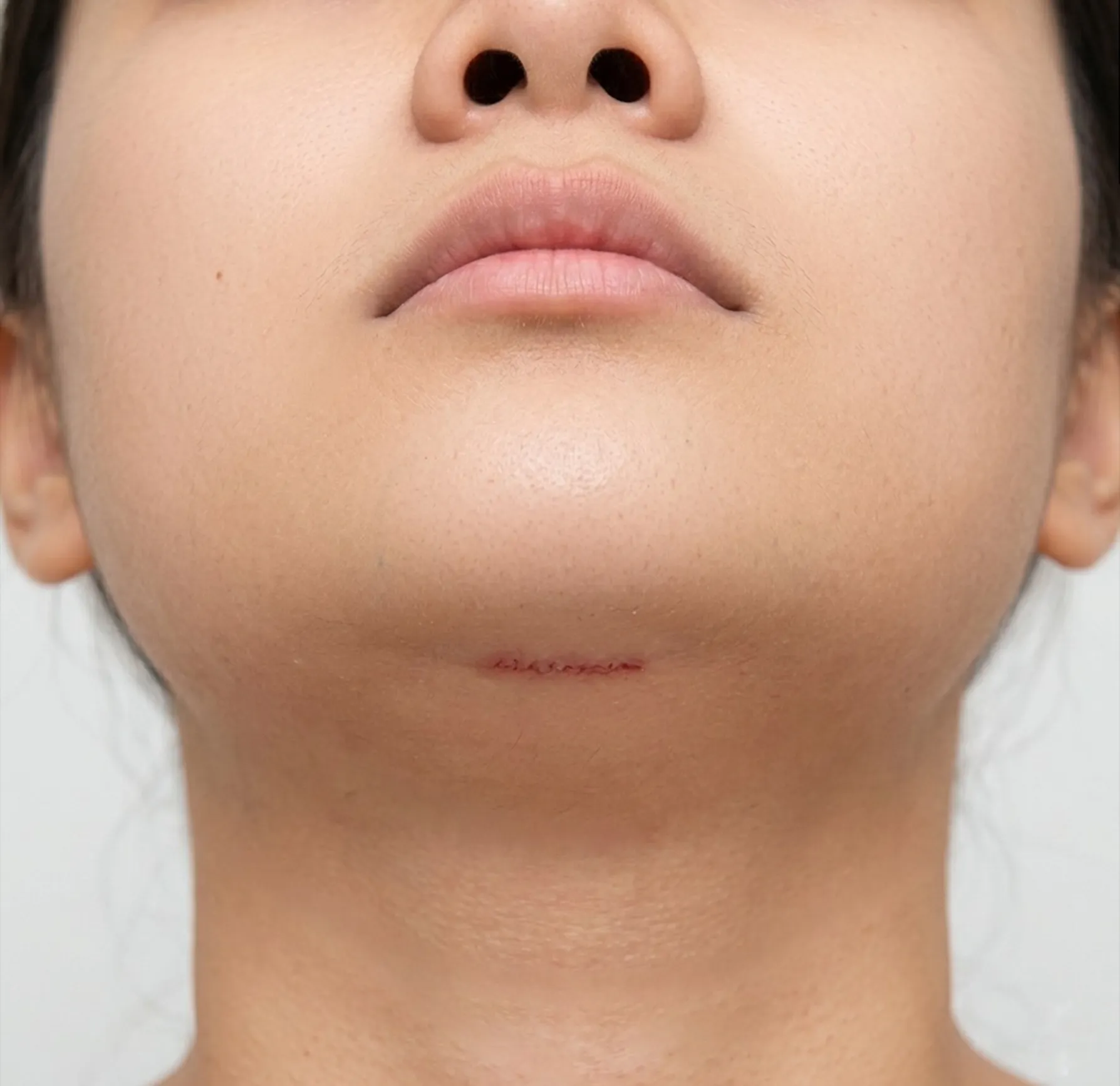
This form of chin implant plastic surgery uses an incision beneath the chin, generally measuring approximately 1.5-2 centimetres. The surgeon accesses the chin bone through this opening and positions the silicone chin implant.
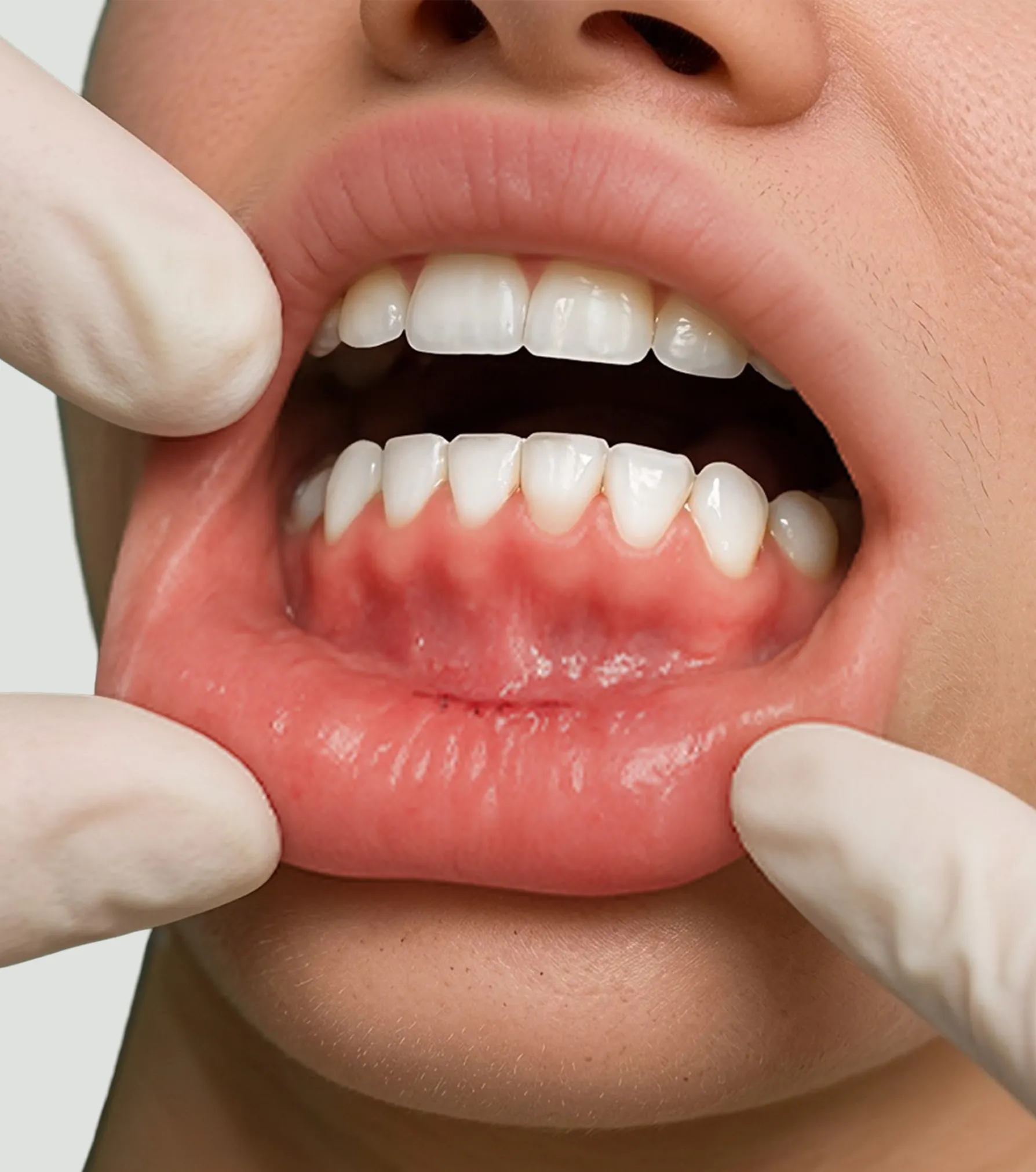
This technique uses an incision inside the mouth, between the lower lip and gum. The incision is generally approximately 1.5-2 centimetres long. The silicone chin implant is placed beneath the tissue covering the chin bone.
The appropriate incision for chin augmentation depends on anatomy, the implant design, previous procedures, oral health and the surgeon’s treatment plan.
Medical-grade silicone is one of the materials widely used for chin implant plastic surgery in Bangkok. It is selected because of its established use in medical applications and its ability to remain in the body over the long term. However, modern implant design now includes different production methods and levels of personalisation.
The main categories can be divided as follows.
A standard implant is manufactured in predetermined shapes, sizes, and curves, commonly labelled S, M, L, or XL. Standard implants are generally divided into 2 designs.
Since every chin bone has different curves, contours, and levels of asymmetry, a prefabricated silicone chin implant may require manual adjustment during surgery. The surgeon may carve the implant to improve its fit. However, manual adjustment is based on surgical assessment and may not reproduce every contour of the underlying bone. An unsuitable fit may contribute to visible edges, displacement or an implant that appears separated from the facial structure.
This is a personalised approach offered for chin augmentation at ONE Surgery & Aesthetics Clinic. Rather than selecting a standard implant size, a new implant is designed and manufactured for the individual patient using 3D technology and a CT scan of the bone structure.
The price of chin augmentation in Bangkok varies according to the treatment plan, implant type, complexity of the case, and services included in the package. Patients should not compare only the implant price or surgeon’s fee.
ONE Surgery recommends completing an assessment before confirming the final price. This allows the surgeon to evaluate the existing structure and create a plan based on the patient’s actual concerns.
Factors that may influence the cost include the following:
A lower advertised price may not include every stage of treatment. Before deciding where to undergo chin augmentation in Bangkok, check whether the quotation covers the following:
Note: The final price depends on the surgeon’s examination and individual treatment plan.
Results
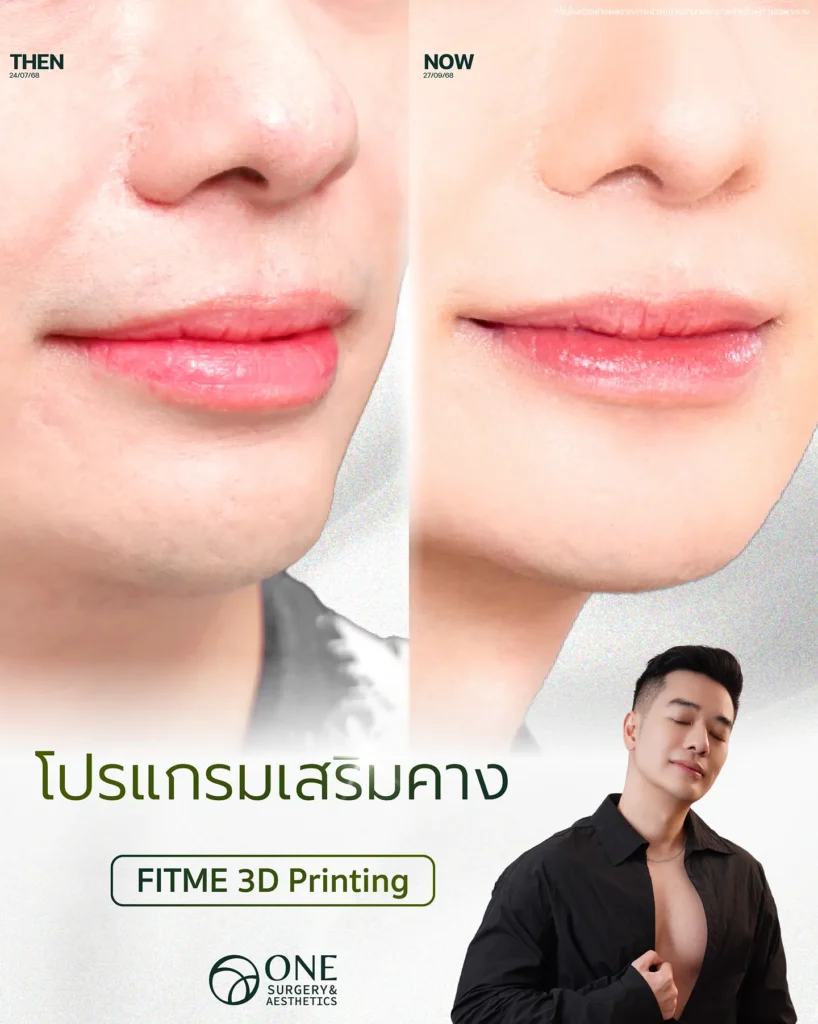
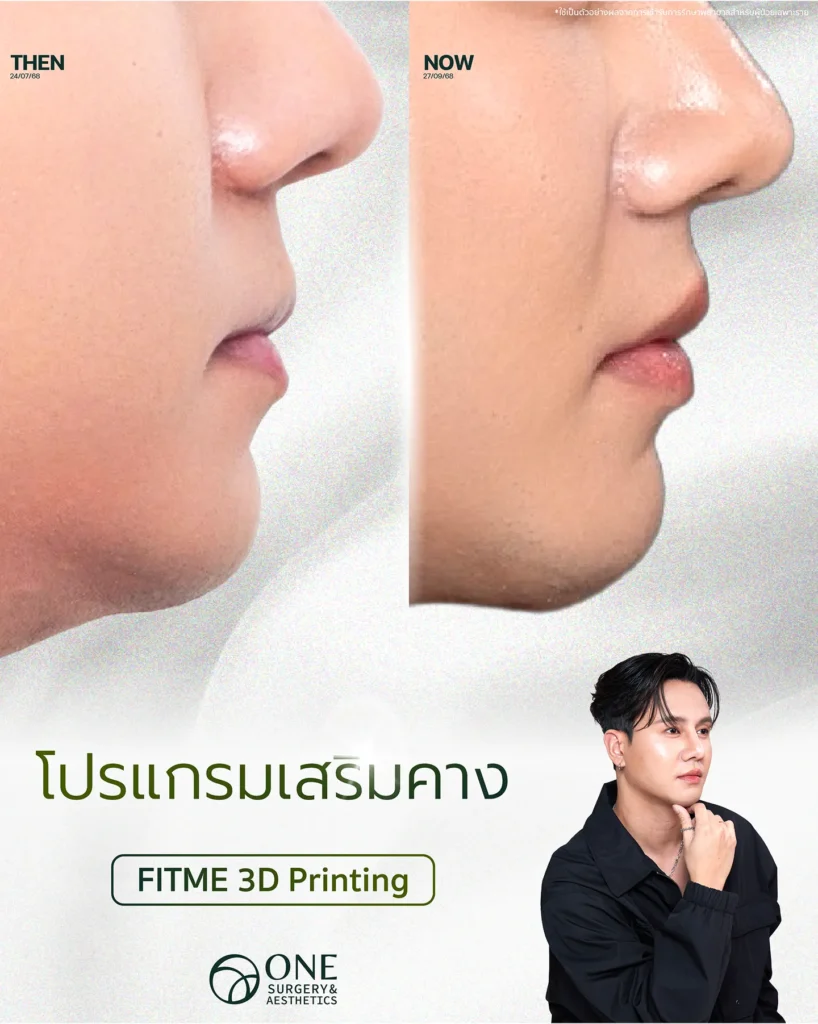
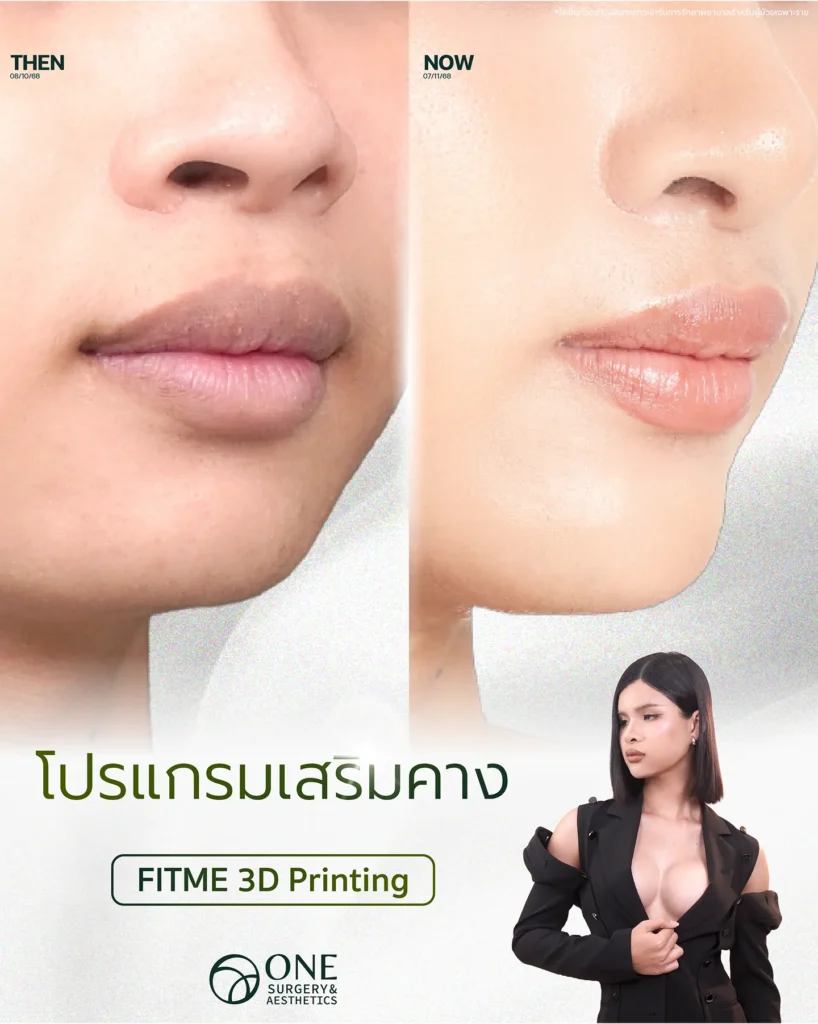
Every chin augmentation case is designed by a facial or plastic surgeon in combination with 3D-printed implant technology.
Our Surgeons
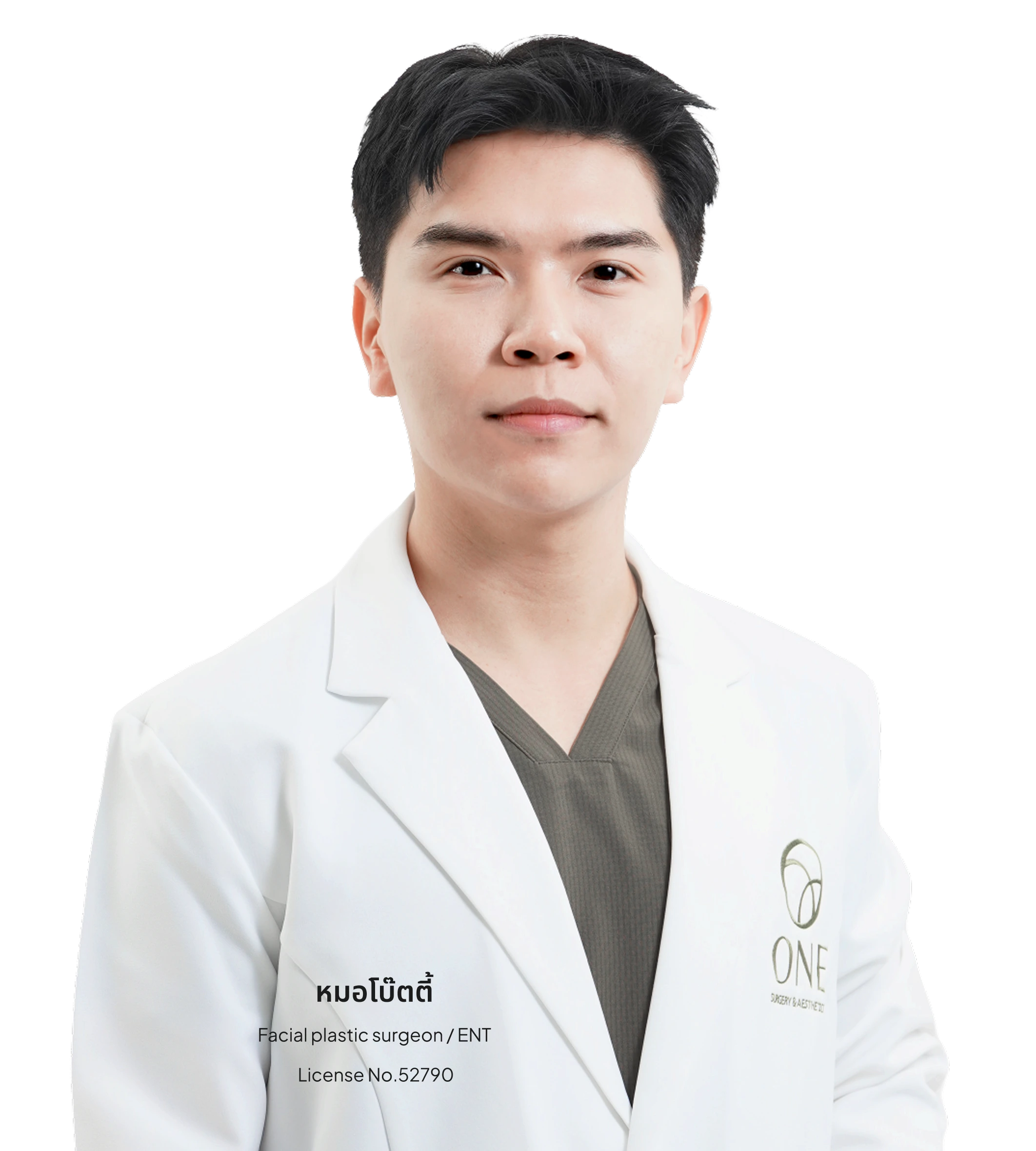
The medical team at ONE Surgery & Aesthetics Clinic has completed relevant professional training and has experience in facial anatomy and aesthetic design for Asian facial structures.
Facial Plastic Surgeon and ENT Surgeon
Medical Licence No. 52790
Facial Plastic Surgeon and ENT Surgeon
Medical Licence No. 58510
Facial Plastic Surgeon and ENT Surgeon
Medical Licence No. 60357
ONE Clinic : Surgery & Aesthetics
The patient journey does not end when surgery is completed. ONE Surgery & Aesthetics Clinic places importance on postoperative results, patient comfort, and recovery. The ONE Aftercare Programme provides supportive care intended to reduce swelling and bruising and help patients return to their routine with greater confidence.

The Anti Inflammatory and Recovery Booster programme is intended to support recovery after chin implant plastic surgery. The treatment plan is determined by qualified medical professionals according to the patient’s health and clinical suitability.

LED Light Therapy may be used as part of postoperative care to support normal tissue recovery and help reduce tightness and swelling around the surgical area.
The suitability and expected benefits of each aftercare treatment should be assessed individually.
ONE Clinic : Surgery & Aesthetics
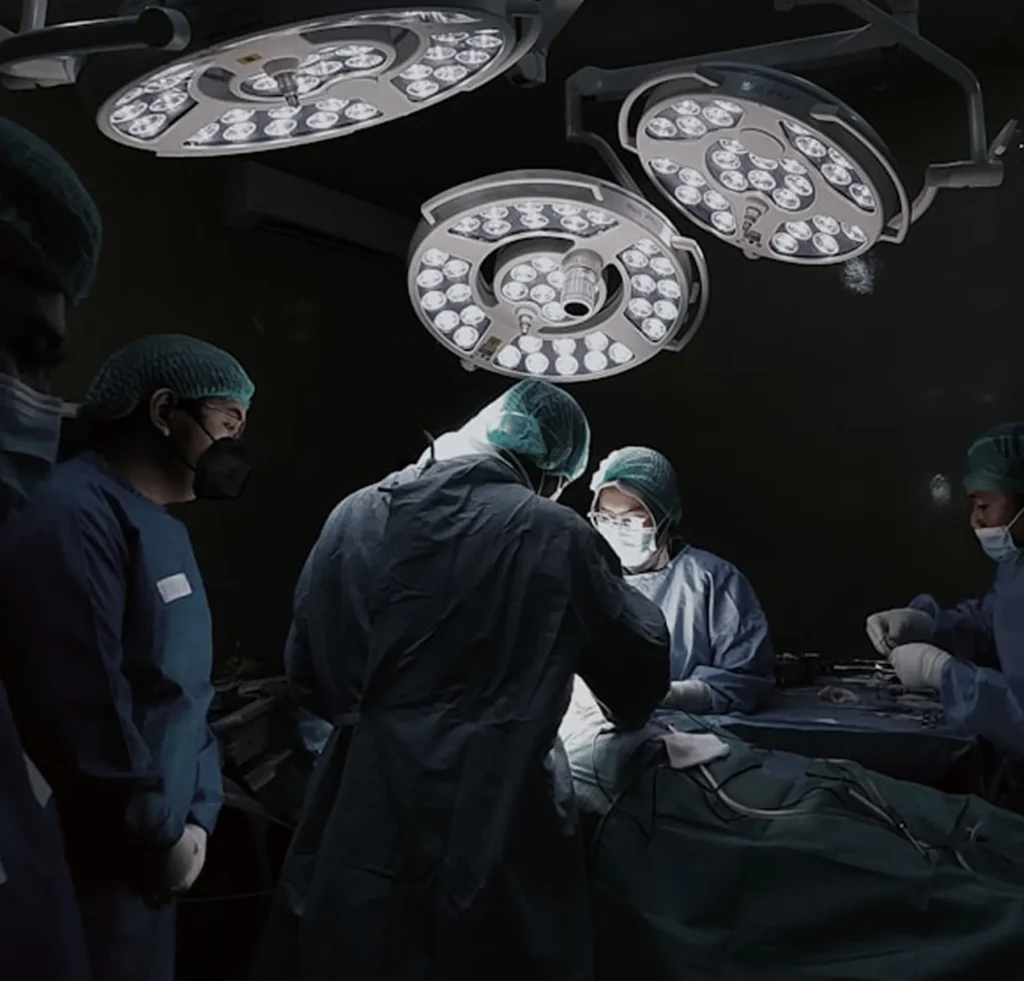
Patient safety is a central consideration at ONE Surgery & Aesthetics Clinic. The clinic uses operating facilities and medical equipment designed to support surgical care.
Positive Pressure Operating Theatre and ISO Class 7 Cleanroom Standard
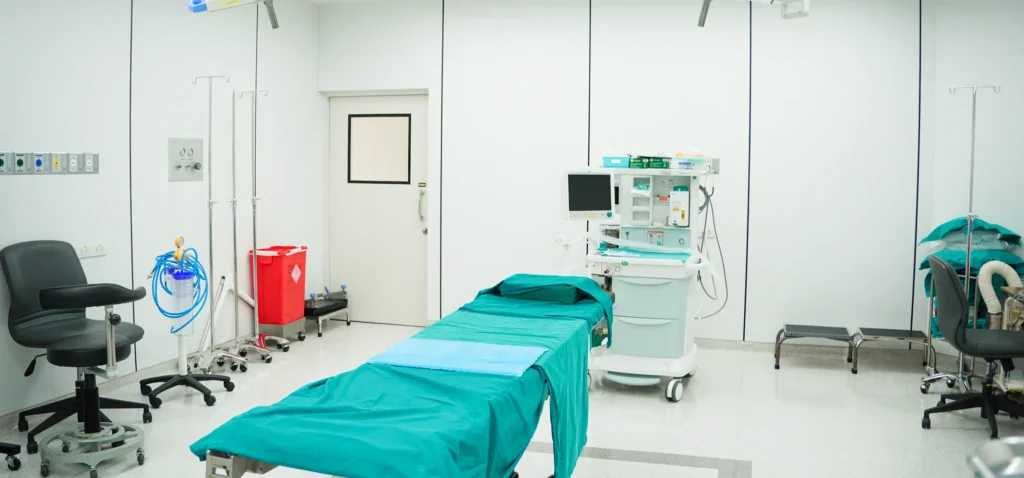
An air control system is used to maintain a controlled and clean environment during chin augmentation and reduce exposure to airborne contaminants.
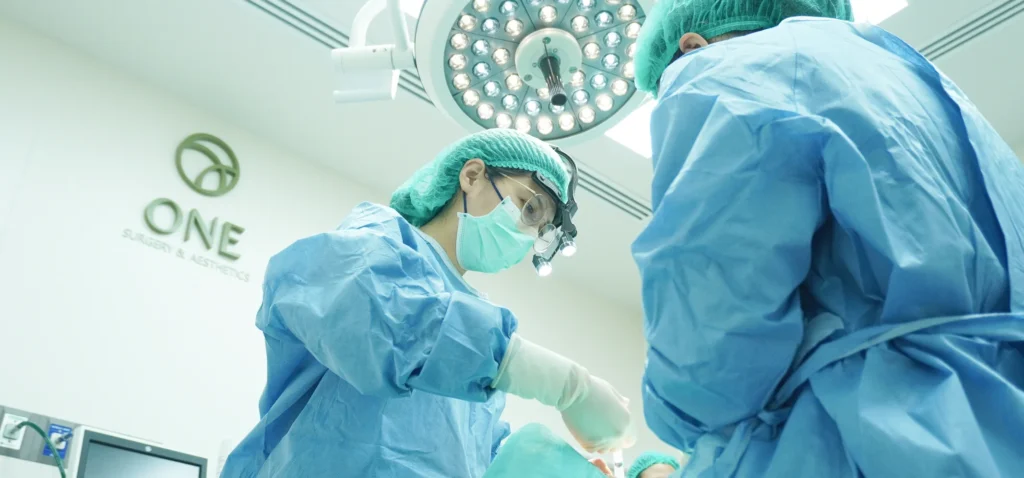
Vital signs are monitored throughout surgery under the supervision of the relevant medical team, and anaesthesia personnel when anaesthesia is used.
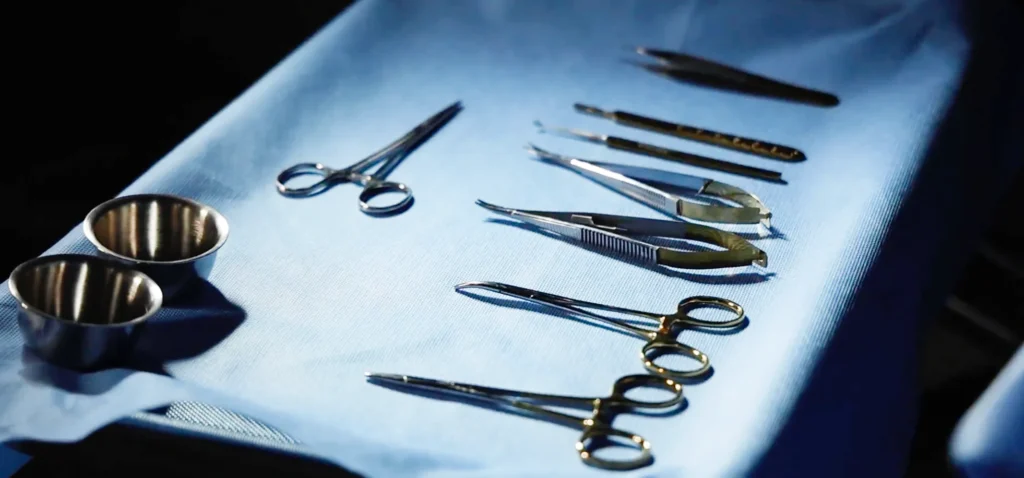
Surgical instruments undergo hospital grade sterilisation procedures before use.
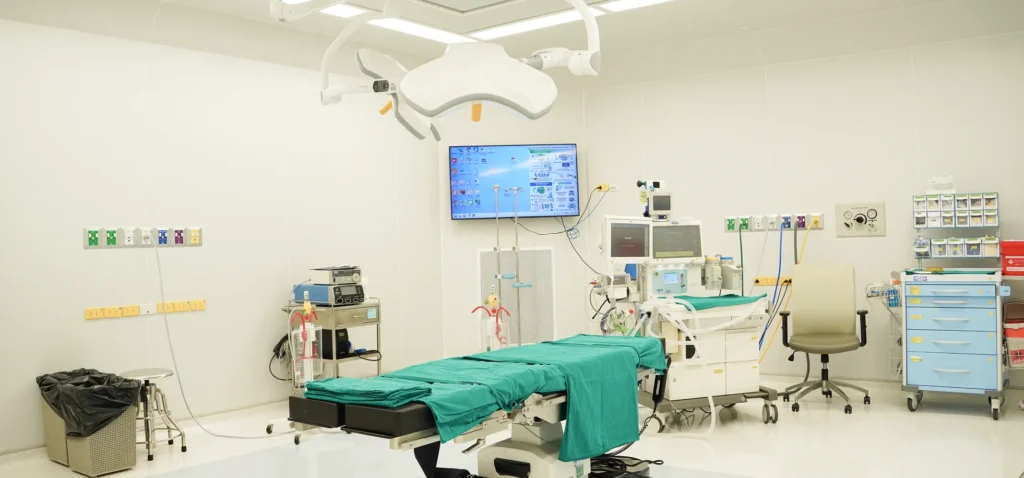
The operating theatre is equipped with emergency and resuscitation equipment, with medical personnel trained to respond to urgent situations.
ONE Clinic : Surgery & Aesthetics
The treatment journey is designed as a clear step-by-step process, beginning with the first consultation and continuing through surgery and postoperative follow-up. Each stage supports informed planning and patient confidence.
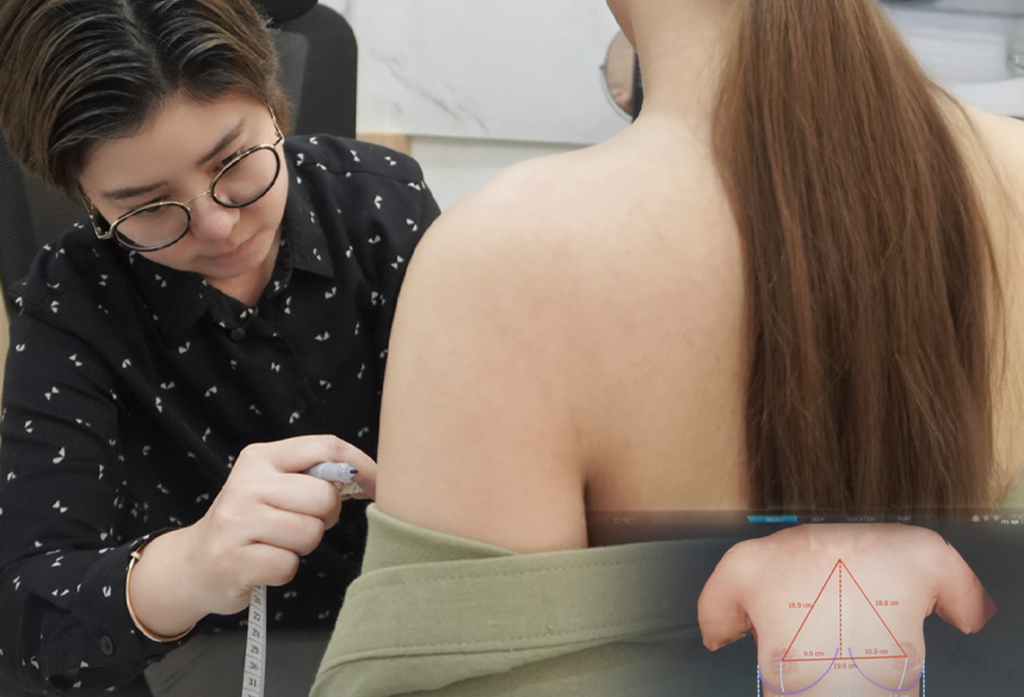
The surgeon discusses the patient’s concerns, goals, medical history and any previous injections or surgery. The face is assessed from the front, oblique, and side views.
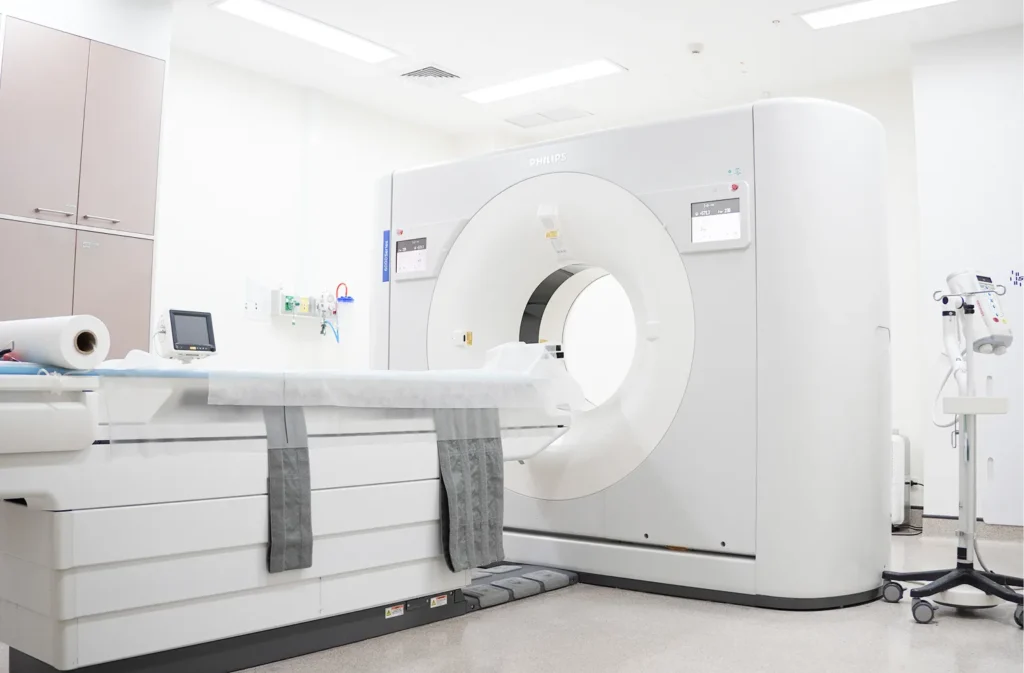
The jaw and chin bones are scanned to evaluate the bone base, asymmetry, and anatomical structures relevant to surgical planning.
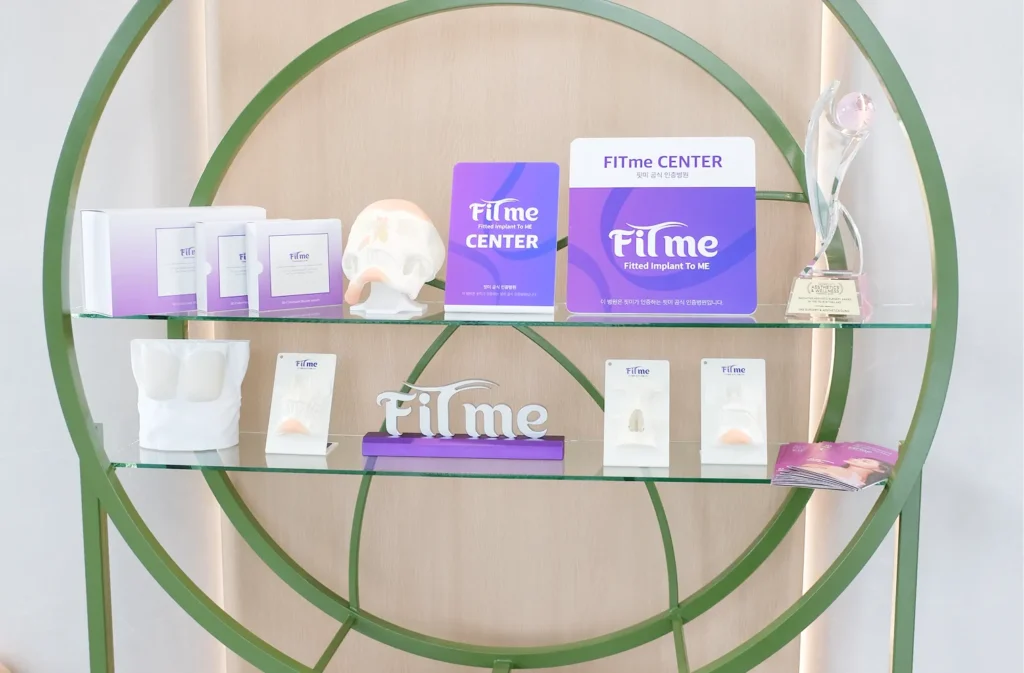
The CT scan and approved design are sent to a partner manufacturing facility in South Korea, where the personalised 3D-printed silicone chin implant is produced.
The surgeon determines the incision location, implant pocket and fixation method according to the individual case. The expected benefits, limitations, potential risks and recovery process are explained before surgery.
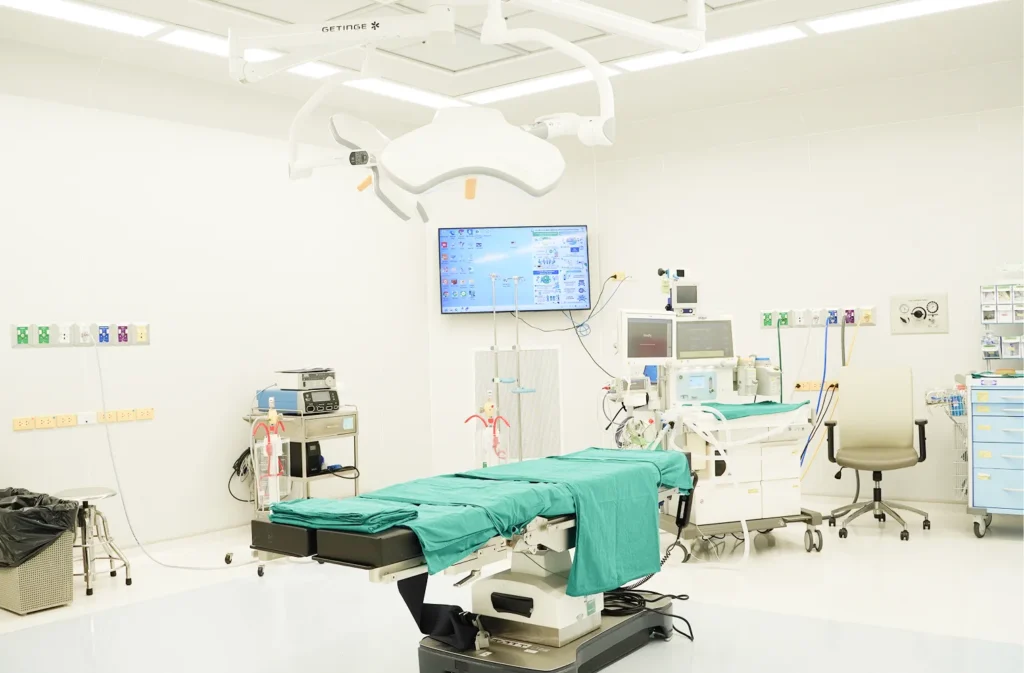
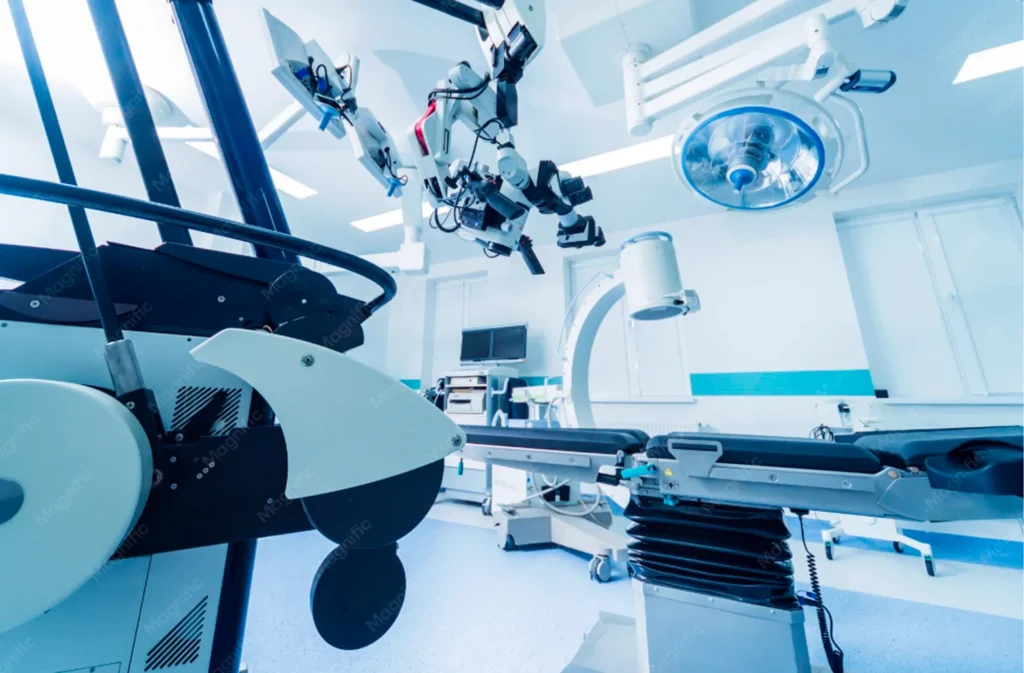
The procedure is performed by a surgeon in an operating theatre prepared with systems and equipment for monitoring patient safety.

Postoperative care includes wound care, monitoring of swelling and bruising, assessment of the implant position, and personalised instructions for recovery after chin augmentation.
When selecting a clinic for chin augmentation in Bangkok, consider the surgeon, implant material, surgical environment, treatment process, and follow-up system. A decision should not be based only on promotional pricing or before and after photographs.
The clinic should be legally registered and display its official name, healthcare facility licence, and verifiable contact details.
The surgeon’s full name, medical licence number, and relevant qualifications or professional experience should be clearly available.
A front view alone may not provide sufficient information. The assessment should consider the front, profile, and oblique views, as well as the relationship between the chin, nose, lips, and jaw. 3D photographs or CT imaging may be recommended when clinically appropriate.
Patients should ask what material will be used, where the silicone chin implant is manufactured, what documentation is available, and why the surgeon considers the implant suitable for the individual case.
A responsible chin augmentation clinic should explain the expected result, recovery period, possible complications, and circumstances that may require revision. No clinic should guarantee that surgery will be completely free from risk.
Consider front, oblique, and profile views. Check whether photographs were taken during the swelling period, during intermediate recovery or after the result had settled.
Ask whether the clinic provides wound care appointments, suture removal, swelling assessments, and a contact channel for reporting unusual symptoms.

Premium recovery facilities.
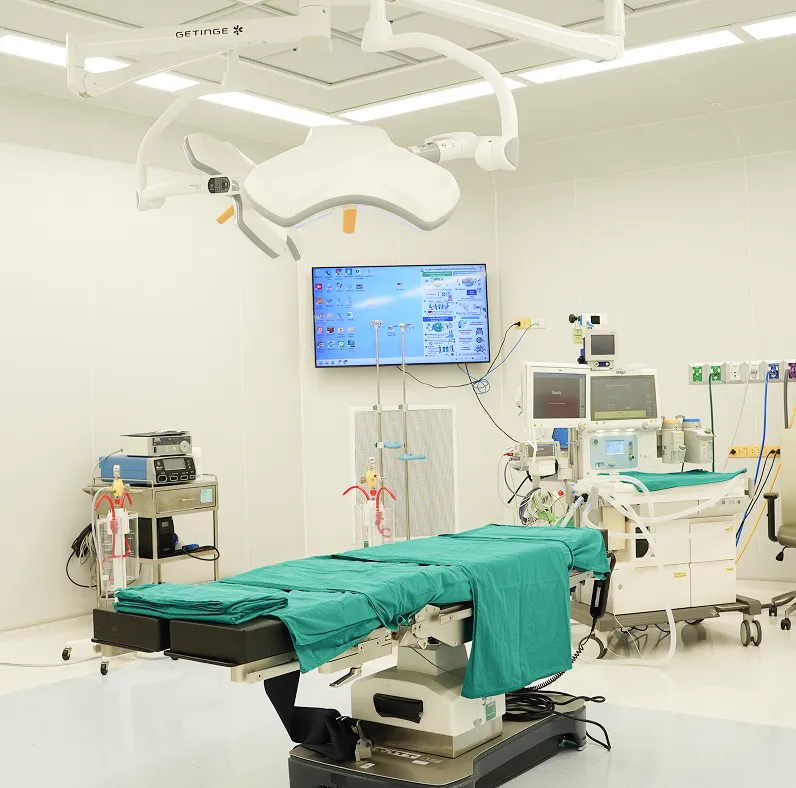
International standard operating theatre.
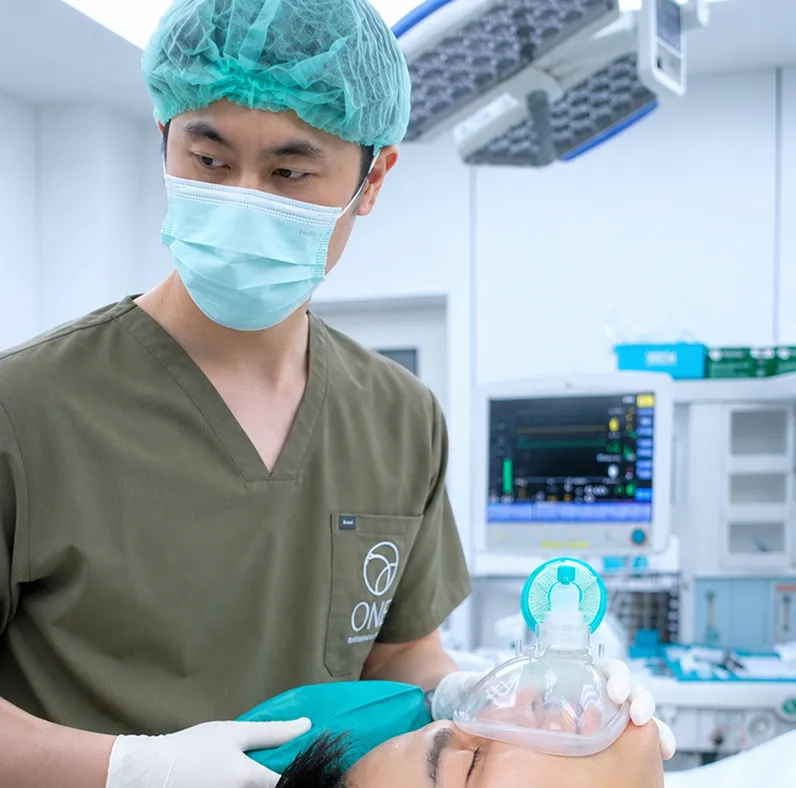
General anaesthesia administered and monitored by an anaesthetist when clinically indicated.
Q & A
A: Swelling is usually more noticeable during the early recovery period and gradually reduces as healing progresses. Many patients can return to work that does not involve strenuous activity once the swelling and discomfort have improved. The actual recovery time varies according to the surgical technique, individual healing response, and type of work. The surgeon will provide an appropriate timeline for each chin augmentation case.
A: The chin shape changes as swelling subsides and the surrounding tissues adjust. The early appearance should therefore not be regarded as the final result. Follow-up is generally required for several weeks or months, depending on the surgeon’s instructions and the progress of recovery after chin implant plastic surgery.
A: The surgeon may recommend a cold compress during the early recovery period to help control swelling. The care method may then be adjusted as healing progresses. Patients should not determine the duration or frequency independently because the advice depends on the incision position and individual symptoms.
A: Temporary numbness, tightness, or altered sensation may occur around the chin and lower lip during recovery. Contact the surgeon if the symptoms become more severe, do not gradually improve or are accompanied by other unusual signs.
A: A standard silicone chin implant is manufactured in predetermined sizes and shapes. A personalised implant is designed using the patient’s facial and bone structure data, allowing the base, width, length, and projection to be planned in greater detail. However, the result and risks of chin augmentation depend on several factors and are not determined by the implant alone.
A: A silicone chin implant can remain in place over the long term, and there is no universal schedule requiring routine replacement. Examination, removal, or replacement may be necessary if infection, implant displacement, a change in shape, a desire for revision, or another complication occurs. Patients should attend follow-up appointments as advised.
A: Yes, the patient can attend an assessment. The surgeon must be informed of the filler brand or type, injected volume, treatment location, and date of injection. The surgeon may recommend dissolving the filler, allowing time for it to reduce, or completing additional examinations before planning chin augmentation.
A: Yes. Male chin augmentation may focus on width, projection, and continuity with the jawline rather than creating an excessively narrow or pointed chin tip. The design depends on the patient’s goals and facial structure.
A: The facial structure should have reached an appropriate stage of development. The patient must also undergo an assessment of physical health, readiness, and understanding of the procedure. Patients below the legal age must follow the clinic’s consent requirements.
A: The number of visits depends on whether the examination, CT scan, and design must be completed at the clinic before the personalised implant is manufactured. The team can provide an initial online consultation and help plan the required travel dates, operation, recovery period and follow-up schedule for each international chin augmentation case.
Step 1: Contact us and you will get an on-line or onsite consultation. The cost of your medical procedure will be the same if you use our service or not.
Step 2: Start packing and get yourself ready for Thailand . We will guide you along the way and help you out with the details.
Step 3: We meet you in Thailand and help you through the entire process from start to finish and beyond.